October tenth: Taiwan’s Double Ten National Day.
I do not know what kind of hidden coincidence this is. China’s National Day, to the west of Taiwan, falls on October first, while Germany’s is October third.
All of them, as if by tacit agreement, in October.
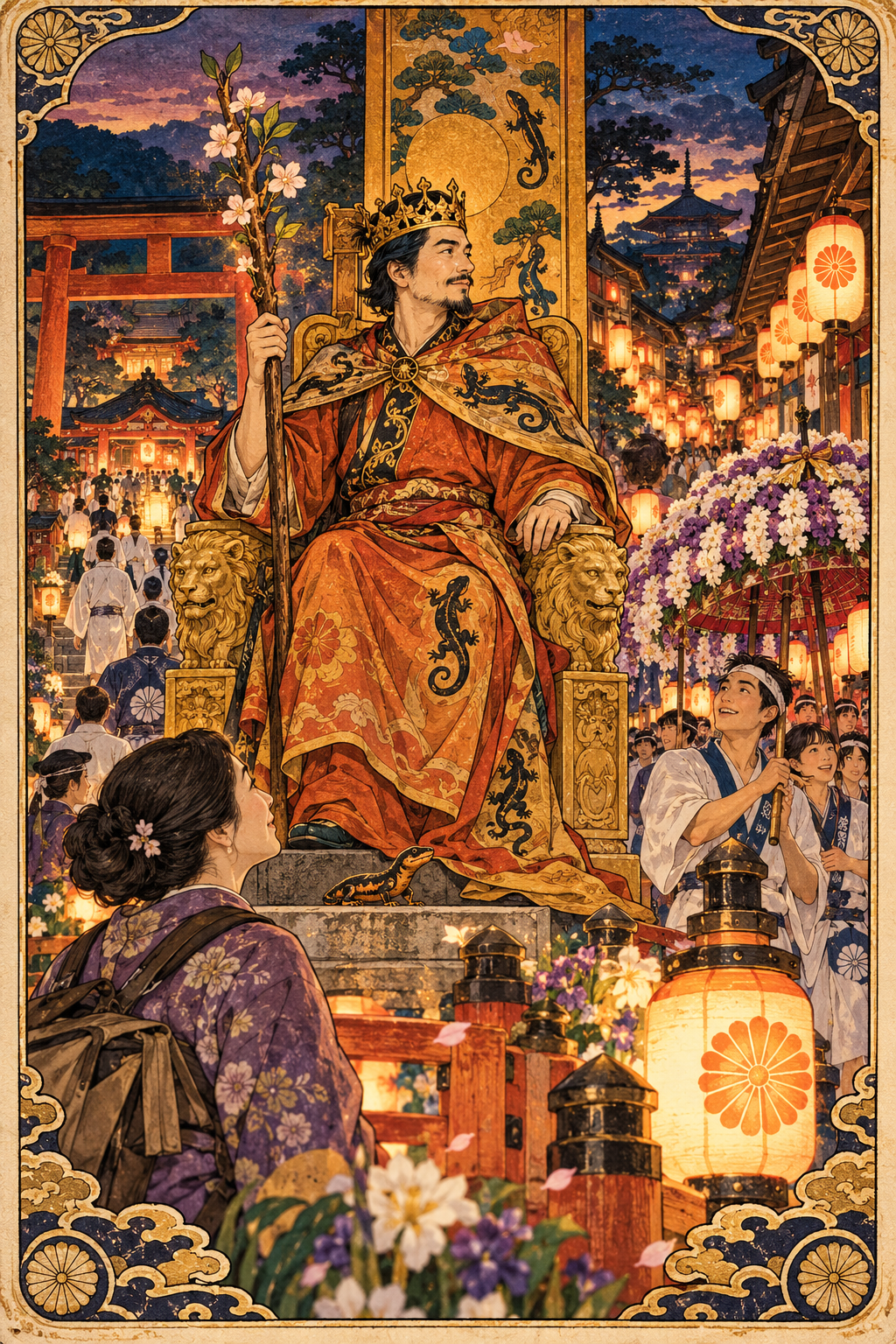
Then, quite by chance, I saw that Kyoto’s Gokonomiya Shrine was holding its Shinkosai festival this week in October, with the flower-umbrella event on the evening of October tenth.
As a properly qualified vampire,
I was exhausted from getting up early for three days in a row this past week, eating breakfast, reviewing my lessons, and answering work emails.
I made up my mind that, come the weekend, sleeping until I had had enough absolutely had to be carried out.
An evening event could hardly have suited me better.
So I put the news in our language-class group to see whether any classmates wanted to go together.
In the end, the only replies came from the Russian classmate and my fellow German classmate. The Chinese classmate beside me kindly posted photographs of Kyoto as his way of responding that he could not attend; the classmates from every other country remained completely silent.
I do not know why, but even after class, the students do not seem particularly inclined to socialise with one another.
Well, either way is fine!
Perhaps the younger generation is no longer anything like the one I know or understand. Still, as a middle-aged person, I very much want to draw closer to their thoughts and understand them. Otherwise, how am I supposed to belong to the generation in the middle that leads the younger one? 🙂
After sleeping to my heart’s content in the morning, I dealt with some work. In the afternoon, I set off for Gokonomiya Shrine in Kyoto to see its annual flower-umbrella festival.
As the Keihan train drew nearer and nearer to Kyoto, the houses around me became lower, older, and more weathered, worlds apart from Osaka’s modern style of steel and concrete.
I have to admit that I rather like this atmosphere. I simply do not know whether I could ever have the conditions needed to live somewhere around Kyoto.
The festival began at six in the evening, so I arrived early and visited the shrine at around five, while there was still daylight.
The shrine was absolutely packed today. Every open part of the grounds was crowded with stalls, denser and livelier than a night market, while the line of worshippers stretched away in a long column.
The present main hall of Gokonomiya Shrine was built in Keicho 10, or 1605, and the shrine is chiefly associated with prayers for safe childbirth and the well-being of children. The ema and decorations therefore revolve around parents and children, and many of the groups taking part in the flower-umbrella dance come from schools, even kindergartens.
At the starting point, each group first performs once before the judges, then follows the Otesuji Shopping Street all the way to the shrine.
The dance steps may look simple, but holding up those heavy flower umbrellas must still be extraordinarily demanding work.
Watching the person at the very front of the procession pass by, carrying the “sacred lantern,” I do not know why, but the mere sight of those three Chinese characters moved me deeply. It felt as though the lantern were opening the way for the gods.
The light burning inside it is the connection between human beings and spirits, the will to live upon this land.
Unlike the sweeping narratives of creator gods, the kami of Shinto are spirits firmly grounded in the earth, always walking through the human world.
There is no verdict upon unbelievers declaring that those who obey shall prosper and those who resist shall perish.
Is that not rather nice?
讀者留言